How to Vote
Voting in person takes about ten minutes. Here's exactly what happens, from walking in to peeling off the sticker after.
What You'll Need & Showing Up
Vote early in person October 14 to November 2, or on Election Day, Tuesday, November 3 (polls are open 7 a.m. to 8 p.m. and if you're in line by 8, you get to vote). You need to be registered by October 4, Rhode Island has no same-day registration.
What to bring
No photo ID? You can still vote a provisional ballot, and it counts once your signature is matched. Rhode Island also gives out a free voter photo ID card.
Check In and Get Your Ballot
You'll check in, give your name and address (typically sharing your physical Drivers License or Identification) and get a paper ballot. Inform them if you'd like to use touchscreen.
PAper Ballot
Step into a private booth and fill in the oval next to each choice, exactly like the sample below.
Digital Ballot
The ExpressVote lets you make your choices on a screen, then prints your paper ballot. It's built so anyone can vote independently.
Open to every voter, no reason or disability needed. Rather sit and take your time than stand at a booth? This is for you.
What You'll Be Filling Out
Below is an interactive preview for Woonsocket's Precinct 3912 ballot for November 3. You can use this sample ballot to practice, and even save for reference. This experience is fully on device and private.
Submit your Vote
Take your paper ballot to the scanner (the DS200) and slide it into the paper ballot feed tray. If you reach this point, and have second thoughts, you are always allowed to start over!
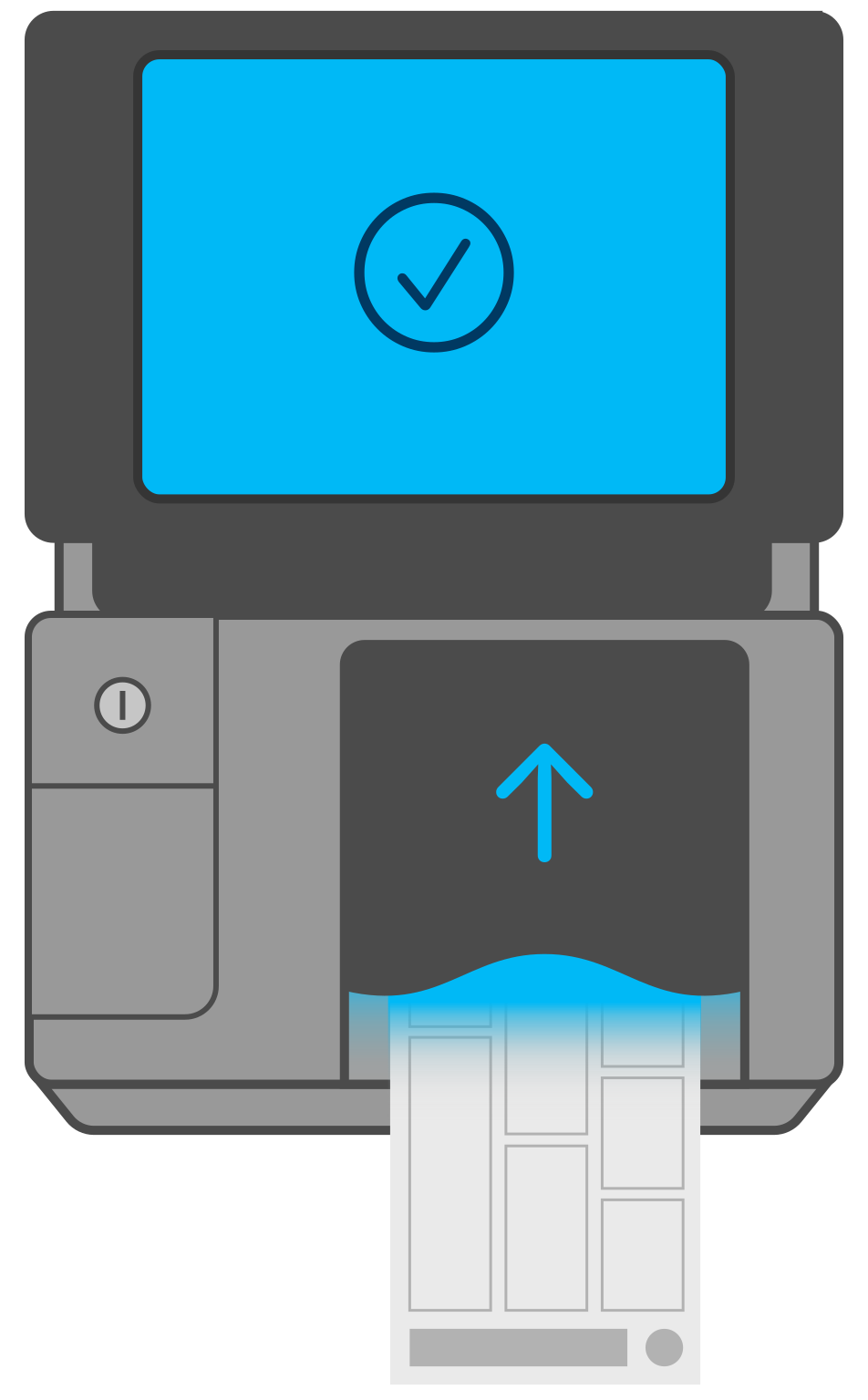
About the DS200
This is the machine that records your votes. In recent elections, voter safety and security has been greatly questioned as compromisable. Here are some facts about the DS200:
It can be hand counted
Every vote is a paper ballot, and the touchscreen prints one too. This paper is the official record, so any result can be recounted by hand, no screen required.
It flags your mistakes
If your ballot has an overvote, or a race left blank, the screen warns you and returns the ballot, so you can fix it before anything is counted.
Two records, not one
As it scans, the DS200 also saves a digital image of each ballot, so the paper and the image can be checked against each other.
Sealed and locked
Its doors lock, the memory sits under tamper-evident seals, and opening it takes access codes. When the polls close, the totals are digitally signed and encrypted.
Federally certified
Before any state can use it, the DS200 is tested and certified to the U.S. Election Assistance Commission's standards.
Checked before every election
Before the polls open, each scanner runs a logic-and-accuracy test: known test ballots go in, and the totals are compared against what they should be.
Double-checked after
Rhode Island was among the first states to require a risk-limiting audit after every general election: officials hand-count a random sample of the paper until there is strong statistical proof the machines got it right.
Sources: RI Board of Elections, Common Cause RI, Verified Voting, U.S. Election Assistance Commission
Good to Know
Yes, you can take a ballot selfie
Rhode Island lets you photograph your own ballot and yourself voting. The one rule: don't photograph anyone else's ballot. So go ahead, show off your picks.
Being in line counts
Polls close at 8 p.m., but if you're in line by 8 you stay in line and you vote. No one can turn you away.
Check before you go
Look up your polling place and confirm you're registered at vote.sos.ri.gov, so there are no surprises at the door.
Help is allowed
If you need it, you can bring someone to help you mark your ballot, or ask a poll worker. The touchscreen is open to every voter too.
I Voted by Isaiah Suchman
That's It. You Voted.
Grab your sticker on the way out. Then tell a friend how easy it was, turnout in Woonsocket is decided by who shows up.